The economy of the Inca Empire was highly organized and efficient. It was based on collective labor and self-sufficiency, which allowed the Incas to manage resources across a vast territory stretching from southern Colombia to northern Chile and Argentina.
Although they had no currency or markets like those of today, the Incas built a solid economy through barter, the exchange of goods, and a strict hierarchical organization of labor.
At Machu Picchu Wayna we explore how the Inca economy worked: from agriculture and livestock to artisan production, roads, storehouses, and its lasting legacy.
Organization of Labor in Inca Society
Forms of Work: Minka, Mita, and Ayni
The organization of labor was the foundation of the Inca economy. Every inhabitant of the Tahuantinsuyo had a defined role and contributed to the well-being of the community. There were three main forms of work: minka, mita, and ayni.
Minka
Minka was a voluntary and reciprocal community work system. Members of an ayllu (community) came together to carry out tasks that benefited everyone, such as building irrigation canals, agricultural terraces, roads, houses, or public buildings. In addition to organizing work, minka strengthened social bonds and community identity.

Mita
Mita was a system of mandatory labor imposed by the Inca state. Men were selected in turns to perform specific tasks, such as building large public works, mining, military service, or administrative duties. Although it was obligatory, the period of service was limited, and workers received food and lodging.

Ayni
Ayni was a system of mutual aid among families based on reciprocity and solidarity. Members of an ayllu helped one another with agricultural tasks, house construction, personal care, and other daily needs. It was a flexible system that adapted to the circumstances of each family.
This collective work system allowed communities to produce and store enough food and resources to meet their needs and contribute to the empire.
Agriculture as a Pillar of the Inca Economy
Agriculture was the foundation of the Inca Empire’s economy and the main source of sustenance for its communities. Thanks to their ability to adapt to the environment and develop advanced techniques, the Incas managed to produce food under different geographical conditions, something essential for such a vast empire.
Advanced Agricultural Techniques of the Incas
The Incas were true masters of agriculture. They developed techniques that allowed them to cultivate in the complex geography of the Andes, make the most of natural resources, and guarantee food for the entire empire.
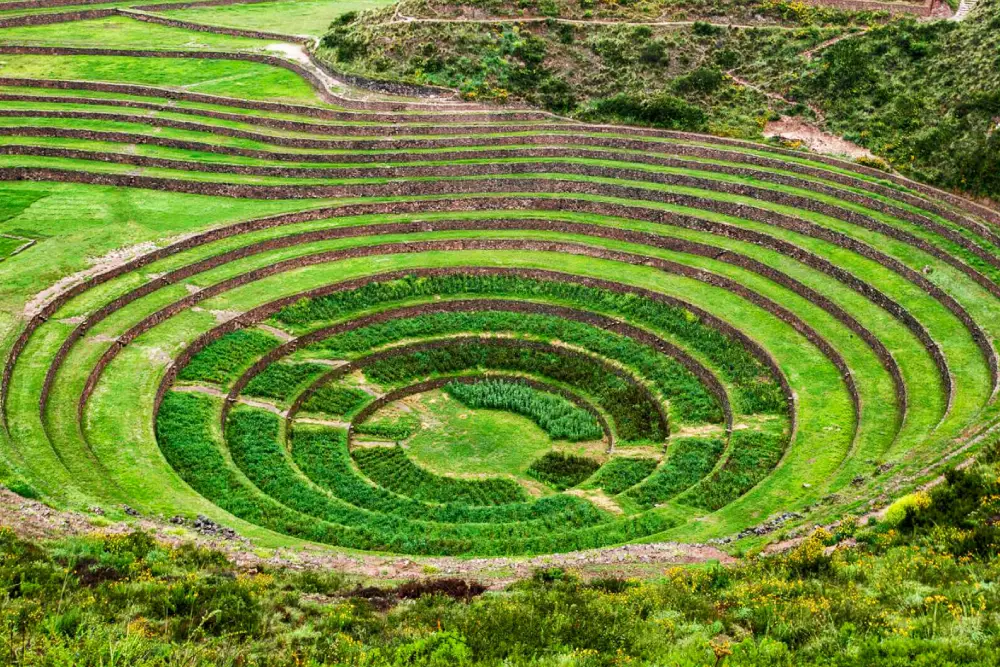
Some of their most outstanding techniques were:
- Andenes: Terraces built on mountain slopes, supported by stone walls. They created flat surfaces for farming on steep terrain, conserved soil and water, and prevented erosion.
- Waru waru: Raised beds surrounded by water channels. They regulated soil temperature, protected crops from frost, and improved drainage, especially in humid areas.
- Irrigation systems: Canals, ditches, and reservoirs that carried water from rivers and glaciers to the fields. They allowed control of irrigation and ensured water supply during dry seasons.
- Natural fertilizers: They used guano (seabird droppings) and manure to enrich the soil and increase productivity.
- Crop rotation: They planted different species on the same land in successive cycles to maintain soil fertility.
These techniques, combined with a deep knowledge of plants and natural cycles, allowed the Incas to grow a wide variety of products adapted to different altitudes.
Main Crops and Their Importance
The Incas grew products adapted to each region. Among the most important were:
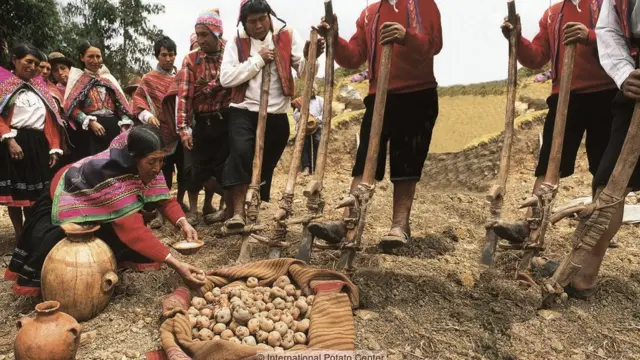
- Potato: It was the most important and versatile crop. They developed more than 200 varieties adapted to different altitudes and climates. It was eaten boiled, in stews, or dehydrated (chuño).
- Maize: Although less abundant than the potato, it had great symbolic and ceremonial value. It was used to make chicha and flour.
- Quinoa: A highly valued pseudocereal for its nutritional value. It was eaten as grain, flour, or in soups, and was considered a sacred food.
- Oca, mashua, and olluco: Tubers complementary to the potato, with different nutritional properties and good adaptation to various climates.
- Beans: A protein-rich legume eaten fresh, dried, or in stews.
- Cotton: Used for textiles and with symbolic value in religious ceremonies.
- Coca: Leaves prized for their stimulating and medicinal properties. They were chewed to combat fatigue and hunger, and used in rituals.
This diversity of products allowed the Incas to maintain a balanced diet and have goods for exchange with other communities.
Herding and Livestock in the Inca Empire
Livestock raising, especially of Andean camelids, complemented agriculture. Llamas and alpacas were part of daily life and played a fundamental role in the Inca economy and culture.
Andean Camelids: Llamas and Alpacas
The Incas considered llamas and alpacas fundamental animals. Llamas were mainly used as pack animals to transport agricultural products and goods along the empire’s routes, facilitating exchange between regions. Alpacas, on the other hand, were raised for their fine wool, used in textile production.
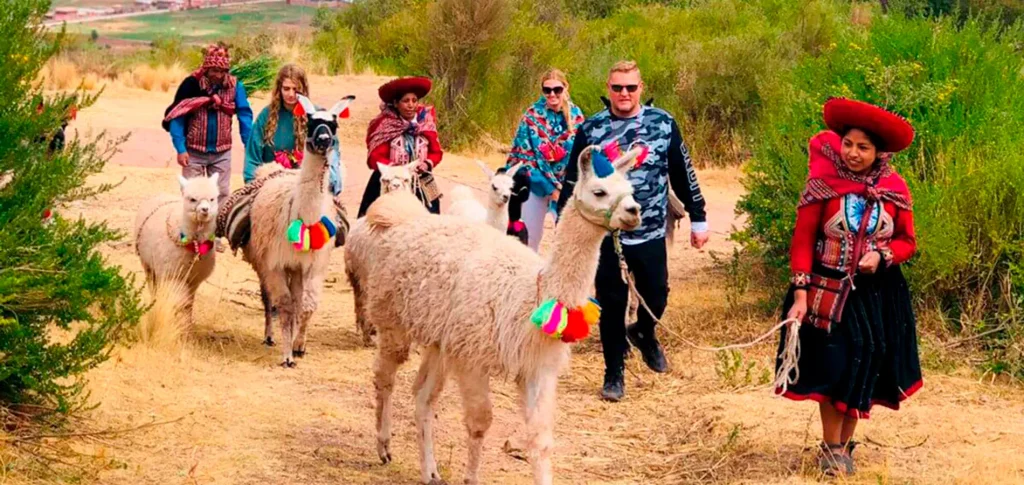
These animals adapted perfectly to the altitude and climate conditions of the Andes. In addition, their meat was dehydrated to make charqui, a reserve food used on military expeditions and long journeys.
Derived Products and Their Economic Use
Valuable products were obtained from camelids: wool, leather, and charqui. Wool was used to produce textiles for clothing and ceremonial objects. Charqui allowed meat to be preserved for long periods. The full use of these animals shows how the Incas maximized the resources of their environment.
Artisan Production and Trade in the Inca Economy
In addition to agriculture and livestock, artisan production played an important role in the Inca economy. Textiles and ceramics were essential both in daily life and in ceremonies, and their exchange strengthened relationships between communities.
Textiles and Ceramics
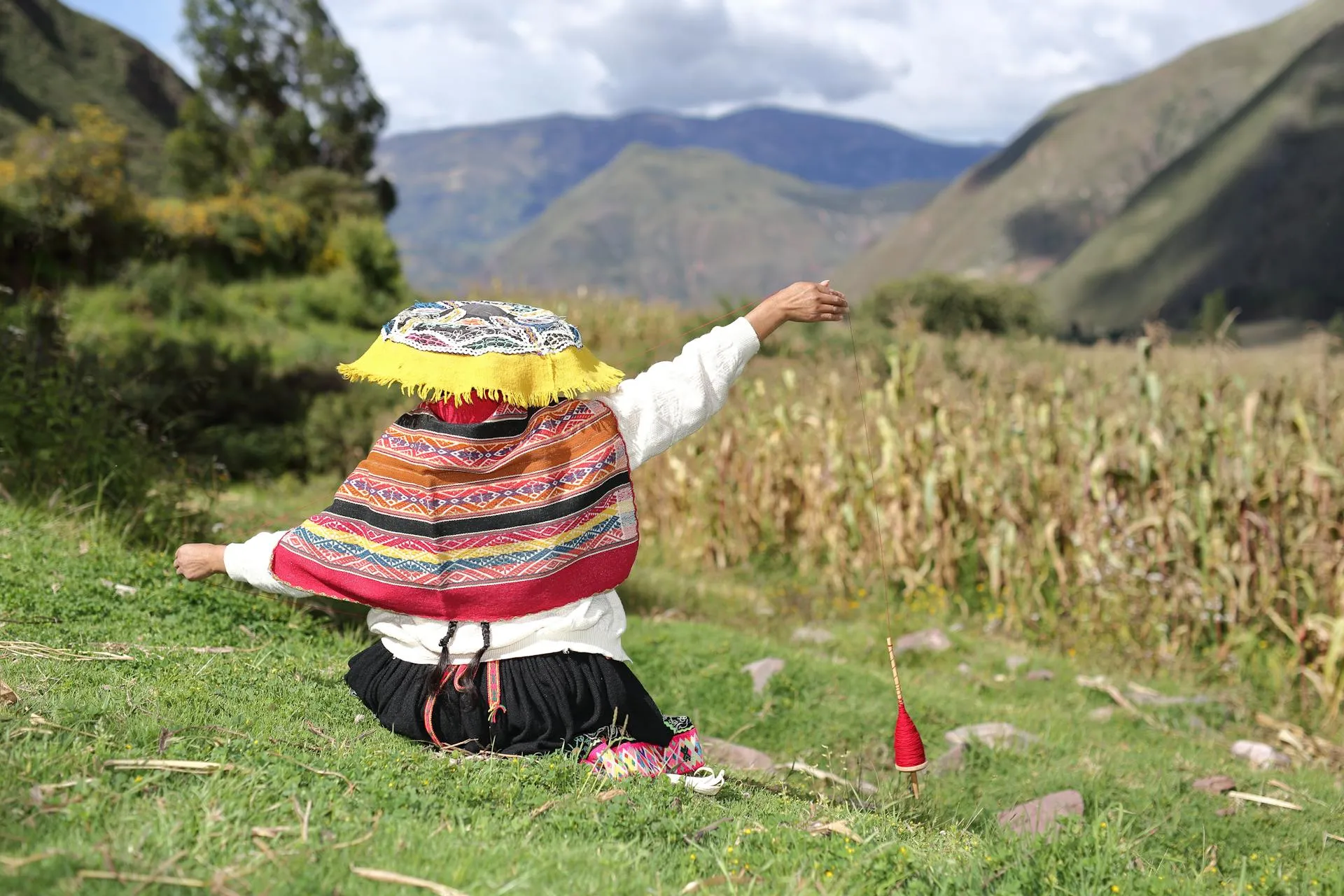
Textile work was a highly valued art. Using alpaca fiber and cotton, the Incas produced high-quality textiles with complex designs that indicated social status and were used as gifts or tributes. Textiles had a strong symbolic meaning in religious rituals and political events.
Ceramics also served practical and ceremonial functions. The Incas made vessels and utensils decorated with geometric motifs and animal representations.

Barter Systems and Local Markets
Barter was the basis of Inca trade, since there was no currency. In local markets, communities exchanged agricultural products, textiles, ceramics, and other goods necessary for daily life. These spaces also served to strengthen social ties and ensure more equitable access to resources.
In addition to barter, there was a tribute system through which communities contributed to the state. In return, the government distributed resources in times of emergency, such as droughts or poor harvests.
Economic Infrastructure: Roads and Storehouses
To sustain a functional economy across such a large territory, the Incas developed an advanced infrastructure of roads and storage centers.
Road Network: the Qhapaq Ñan
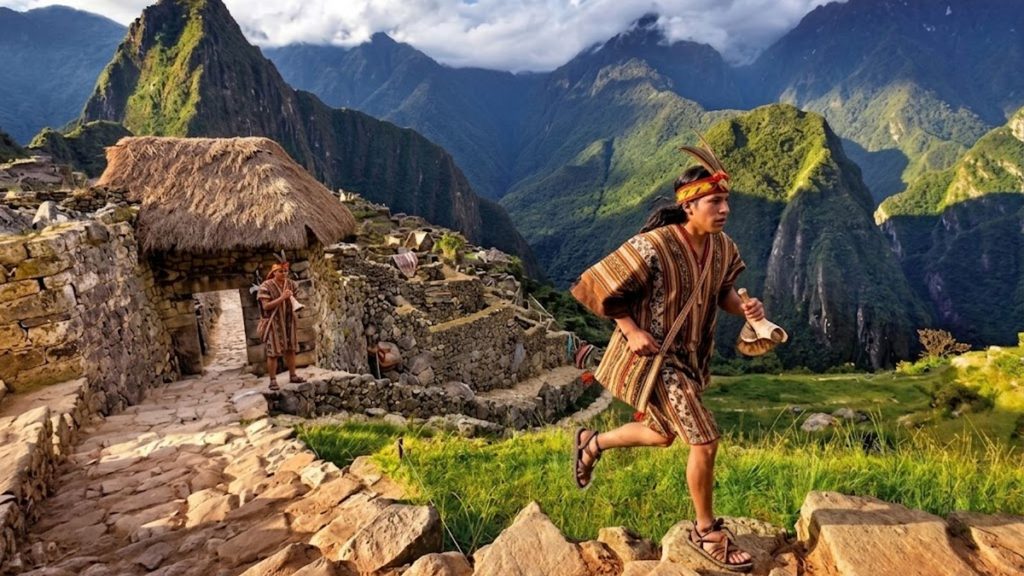
The Qhapaq Ñan, or road network of the Tahuantinsuyo, connected the main regions of the empire. These routes facilitated the movement of people, resources, and messages, and allowed efficient administration and military control. Along them traveled the chasquis, messengers who transmitted information between Cusco and the provinces.
The network included bridges and tunnels and represented an exceptional engineering work that contributed to the political, economic, and cultural unity of the empire.
Tambos and Colcas: Storage and Distribution Centers
Tambos were rest and supply points located along the routes, where travelers and troops could obtain food and resources. Colcas (storehouses) stored surplus agricultural products and textiles. These reserves were managed by the state and distributed in times of scarcity.
The Economic Legacy of the Incas Today
The legacy of the Inca economy remains present in Andean agriculture and crafts. Techniques such as the use of terraces and the raising of camelids continue to be common. The Inca textile tradition is also reflected in contemporary crafts, where ancestral patterns and methods are still maintained.
Influences on Modern Agriculture and Crafts
The andenes system is still used in Andean agriculture. Many farmers apply ancestral knowledge to maintain the productivity of their land. Crops such as potatoes and quinoa continue to be fundamental for local food and export.
In current crafts, Andean textiles and ceramics preserve styles and designs of Inca origin. These traditions have been passed down from generation to generation, preserving part of the economic and cultural heritage of the Tahuantinsuyo.