Location of El Brujo
El Brujo is located in La Libertad, in the district of Magdalena de Cao. This archaeological center is situated in the Chicama Valley, 60 kilometers north of Trujillo.
The site is only 2 kilometers from the Pacific Ocean, at the mouth of the Chicama River. Its strategic location made it an important point for the cultures that inhabited this area for over 1,500 years.
You can reach it via the Pan-American Highway North until the turnoff for Magdalena de Cao. The complex features a modern Site Museum where the most significant findings are displayed.
History of El Brujo
El Brujo was inhabited by different cultures for fifteen centuries. The earliest occupations date back to the Cupisnique culture (1500-500 BC), followed by the Moche (100-700 AD) and finally the Chimú.
The Moche culture further developed this site, constructing the impressive huacas that dominate the landscape. The Moche used El Brujo as an important ceremonial center where they performed complex religious rituals.
The scientific rediscovery began in the 1990s under the direction of archaeologist Régulo Franco Jordán. The most spectacular finding occurred in 2006 when the intact tomb of the Lady of Cao was discovered.
The huacas of the complex
The El Brujo complex consists of three main huacas: Huaca Prieta, Huaca El Brujo, and Huaca Cortada. Each structure served specific functions within the Moche ceremonial scheme.
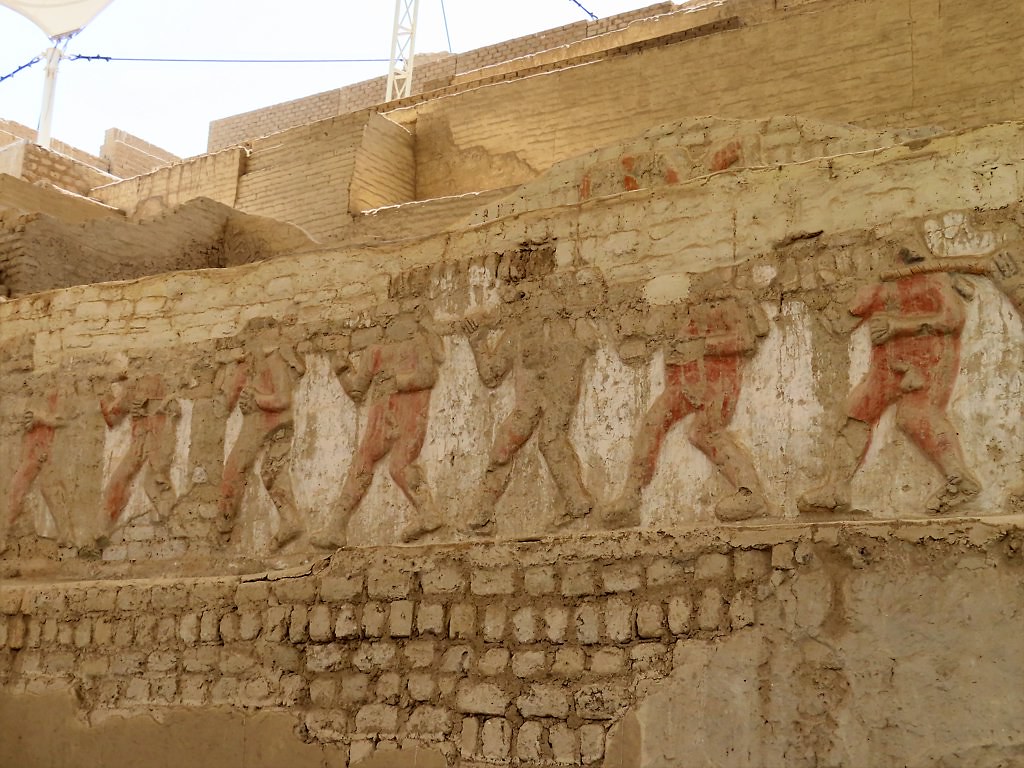
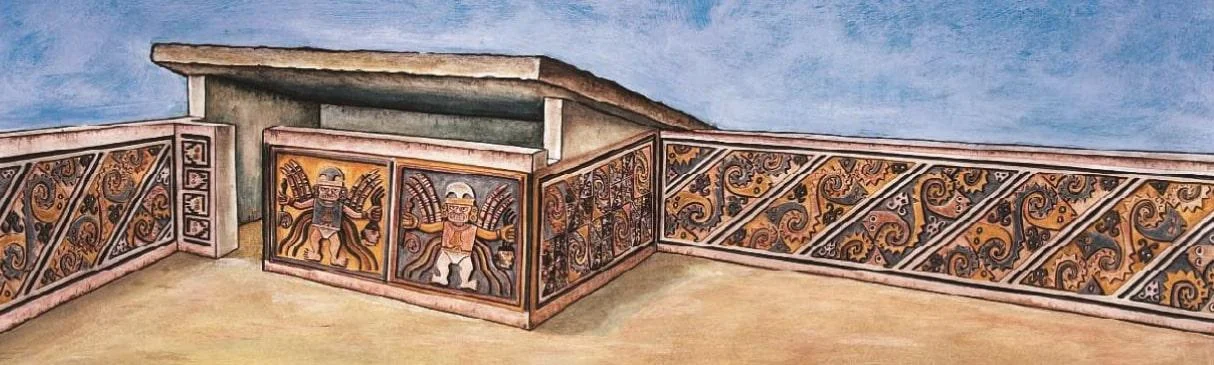
Huaca El Brujo is the most imposing, standing 30 meters tall with a base of 100 by 80 meters. This ceremonial pyramid is adorned with extraordinary polychrome friezes depicting ritual scenes, warriors, and Moche deities.
Huaca Prieta is the oldest site in the complex, with evidence of occupation dating back 4,500 years. Archaeologists have found some of the oldest textiles in the Americas here.
The Lady of Cao
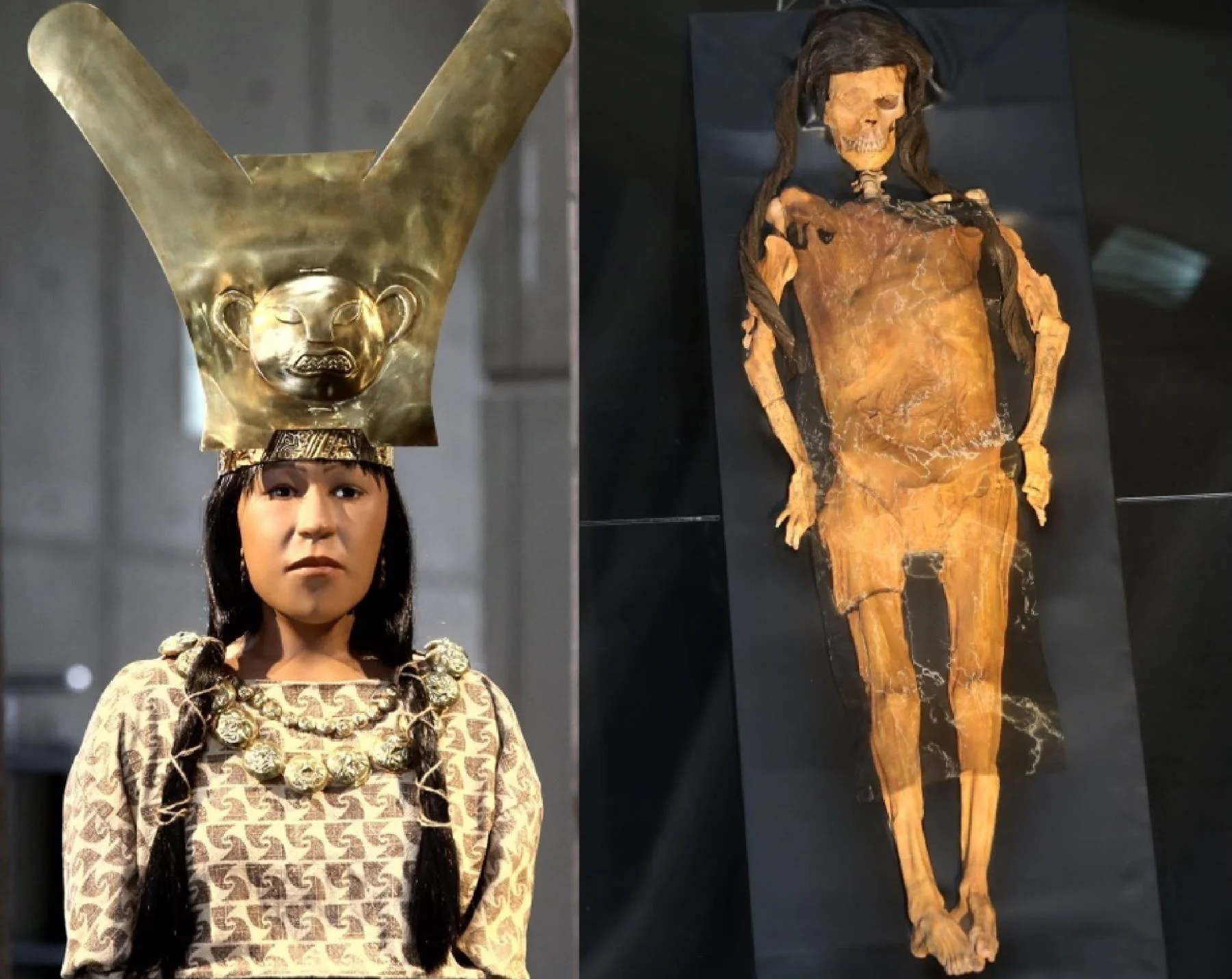
The discovery of the Lady of Cao in 2006 revolutionized our understanding of the role of women in Moche society. This powerful ruler lived in the 4th century AD.
The Lady of Cao was buried with extraordinary ornaments made of gold, silver, and copper. Her body was covered with over 20 tattoos representing snakes, spiders, and sacred Moche symbols.
Studies revealed that she died at the age of 25 and stood 1.45 meters tall. Her tomb contained over 150 ceremonial objects that would accompany her on her journey to the afterlife.
Ceremonial importance
El Brujo served as one of the most important ceremonial centers of the Moche culture in the Chicama Valley. The rituals performed here were related to ancestor worship and agricultural cycles.
The friezes of Huaca El Brujo depict scenes of sacrifice ceremonies involving priests, warriors, and prisoners. These representations help us understand Moche religiosity.
The ceremonial platforms were designed to accommodate large crowds during religious festivities. The Moche used these spaces to make offerings to their deities.
Moche art at El Brujo
The polychrome friezes of El Brujo represent one of the most sophisticated artistic expressions of pre-Columbian America. These decorations were made with natural pigments that retain their original colors.
The iconography includes depictions of the god Ai-apaec, the moon goddess, and warriors adorned with feline headdresses. These motifs reveal the complexity of Moche religious thought.
The construction technology demonstrates the Moche mastery of monumental architecture techniques. They used millions of adobe bricks to build structures that have withstood earthquakes and the test of time.
Site museum and conservation
The Site Museum of El Brujo houses one of the most important collections of Moche art in Peru. The exhibition includes the facial reconstruction of the Lady of Cao, created using modern forensic techniques.
Conservation efforts include protecting the polychrome friezes with special coverings. Archaeologists continue to conduct excavations that reveal new aspects of Moche culture.
The importance of El Brujo lies in its ability to help us understand the complexity of pre-Columbian societies in Peru. This site demonstrates the high development of American cultures prior to the Incas.