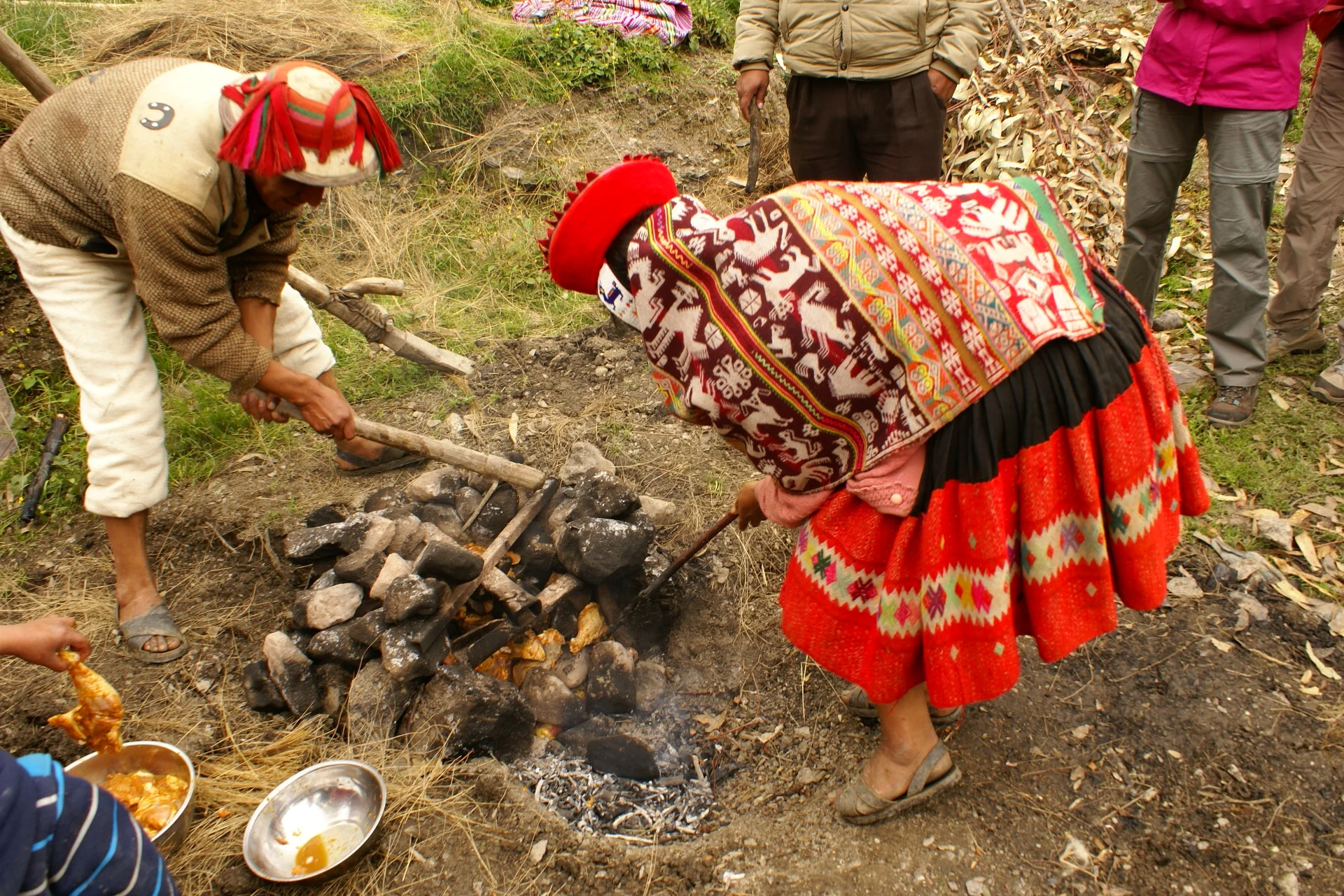
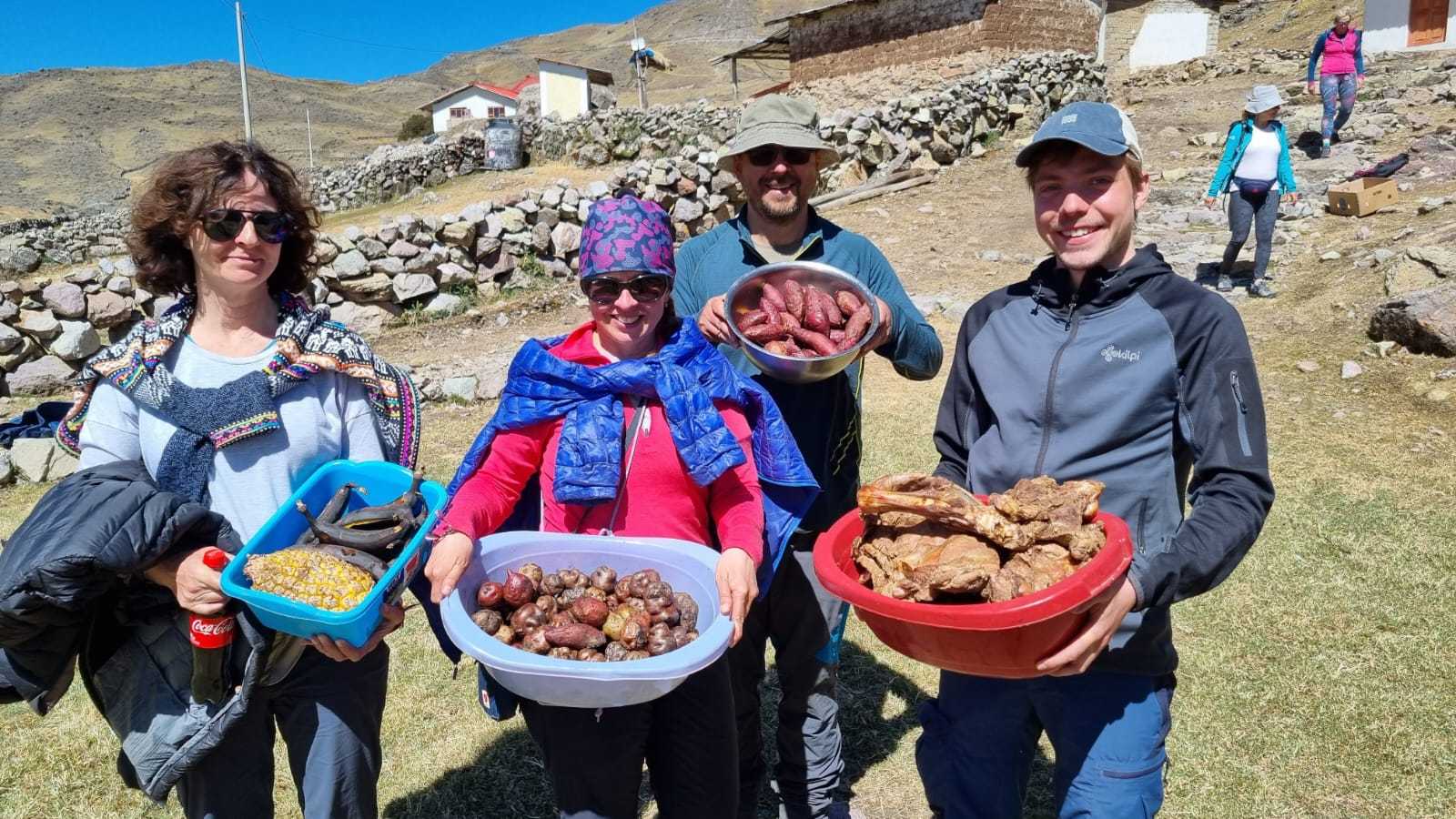
The Pachamanca Day is a special celebration that honors one of the oldest culinary techniques in Peru. This festival highlights the significance of a pre-Hispanic cooking method that has transcended generations, keeping the essence of Andean gastronomy alive.
The ancestral origin of Pachamanca
Pre-Hispanic roots
The word “pachamanca” comes from Quechua: “pacha” (earth) and “manka” (pot). This combination perfectly describes the process: cooking using the earth as a natural container. The ancient inhabitants of the Andes developed this technique over 8,000 years ago, turning it into a sacred tradition.
Spiritual significance
For Andean cultures, pachamanca represents much more than cooking food. It is a ritual of gratitude to Pachamama (Mother Earth), where the best of the harvest is offered in reciprocity for her blessings. This practice reflects the Andean philosophy of “ayni” (reciprocity) with nature.
The traditional technique: Art and wisdom
Preparing the earth oven
The process begins with the careful selection of volcanic stones that retain heat. These are heated with firewood until they reach high temperatures, creating a natural underground oven that will cook the food evenly.
The food is wrapped in banana leaves or aluminum foil, placed on the hot stones, and covered with earth. This underground cooking process takes about two hours, during which families share stories and strengthen community bonds.
When is Pachamanca Day celebrated?
Although pachamanca is prepared throughout the year for special occasions, the National Pachamanca Day is celebrated every October 15. This official date recognizes the cultural and gastronomic importance of this ancient tradition.
Special occasions
Family celebrations: Baptisms, weddings, anniversaries Community festivities: Patron saint festivals, harvests Experiential tourism: Authentic experiences for visitors Corporate events: Team building and business celebrations
Regions where the tradition flourishes
Junín: Cradle of Pachamanca
The region of Junín is considered the heart of this tradition. Here, each family maintains culinary secrets passed down through generations, perfecting techniques that make each preparation unique.
Huancavelica and Ayacucho
These regions have preserved the most authentic ways of preparation, maintaining ancestral rituals that accompany the cooking process.
Cusco and Apurímac
In these sacred lands, pachamanca is integrated with Andean ceremonies, creating deep spiritual experiences that connect people with their roots.
Unique benefits of underground cooking
Unmatched flavor
The slow and even cooking in the earth oven produces unique flavors that cannot be replicated with conventional methods. The food retains its natural juices and absorbs the aromas of the herbs.
Healthy eating
This cooking method preserves the nutrients of the food, requires no additional oils, and maintains the natural texture of each ingredient.
Environmental sustainability
Pachamanca uses renewable natural resources, generates no polluting emissions, and promotes responsible land use.
How to experience Pachamanca
For tourists
Many rural communities offer experiential activities where visitors can participate in the entire process: from preparing the oven to the final tasting. These experiences include:
Gathering aromatic herbs
Participating in gratitude rituals
Learning ancestral techniques
Tasting traditional dishes
Modern variants
Some families have adapted the traditional technique for urban spaces, using special grills or clay ovens that simulate the conditions of the underground oven.
Cultural and social impact
Community strengthening
Preparing pachamanca requires teamwork, strengthening family and community ties. It is an activity that unites generations and transmits important cultural values.
Preservation of traditions
This practice keeps pre-Hispanic culinary traditions alive, ensuring that ancestral knowledge is not lost over time.
Tourism development
Pachamanca has become an important tourist attraction, generating income for rural communities and promoting sustainable gastronomic tourism.
Tips for preparing an authentic Pachamanca
Ingredient selection
Use local and seasonal products to maintain authenticity. Native tubers and fresh aromatic herbs are essential elements.
Cooking technique
Respect traditional cooking times. Patience is key to achieving the best results.
Festive atmosphere
Prepare the pachamanca in a celebratory environment, inviting family and friends to share this unique experience.
Pachamanca in modern Peruvian gastronomy
International recognition
The technique of pachamanca has gained worldwide recognition, being highlighted by international chefs as an example of sustainable and traditional cooking.
Culinary innovation
Some gourmet restaurants have incorporated elements of pachamanca into their menus, creating fusions that respect tradition while exploring new flavors.